Private Bathrooms in First Class: The Ultimate Symbol of Aviation’s Luxury Arms Race
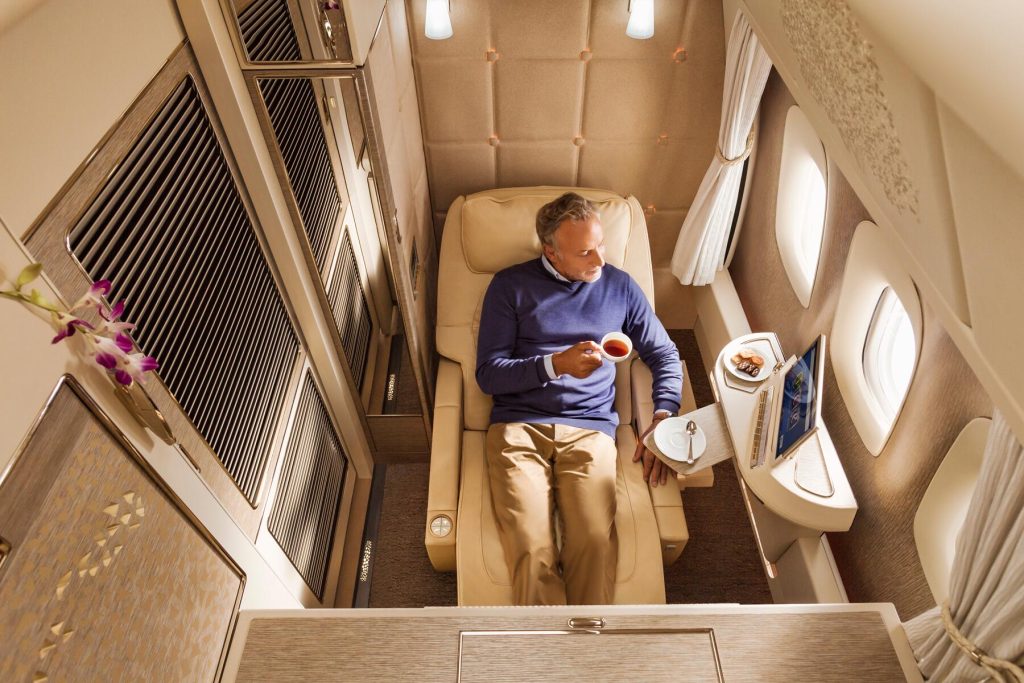
The aviation industry’s relentless pursuit of ultra-luxury amenities has reached what I consider a new peak of absurdity. A major Middle Eastern carrier recently announced plans to install private en-suite bathrooms in every first-class suite, marking what might be the most extravagant airline amenity yet conceived.
During a recent industry summit in Berlin, the CEO of this Dubai-based airline made the unusual decision to publicly announce these bathroom plans while actively encouraging competitors to copy the idea. This strikes me as either supreme confidence or a calculated marketing stunt—most airlines typically guard their innovations closely until launch.
The Engineering Challenge Nobody Asked For
From a practical standpoint, I find this development fascinating yet problematic. Installing individual bathrooms for each first-class passenger presents significant engineering hurdles that go far beyond simple luxury. The additional plumbing infrastructure would make retrofitting existing aircraft prohibitively expensive, while the weight implications could fundamentally alter aircraft performance.
Consider the numbers: a single first-class suite already weighs approximately half a ton, compared to just 200 pounds for business class and a mere 20 pounds for economy seating. Adding a 200-pound bathroom to each suite creates a cascading effect of weight distribution challenges. We’ve already seen carriers struggle with overweight premium cabins—one European airline recently had to install tail counterweights because their new first-class suites were too heavy.
Who This Really Benefits (And Who It Doesn’t)
Let’s be honest about the target market here. This amenity isn’t designed for the occasional leisure traveler splurging on a honeymoon upgrade. These suites, priced between $10,000 and $20,000 each way, cater to an incredibly narrow demographic: ultra-high-net-worth individuals, corporate executives with unlimited travel budgets, and those choosing commercial aviation over private jets for long-haul routes.
For the vast majority of travelers—even those who can afford business class—this development is essentially irrelevant. It represents the growing chasm between aviation’s haves and have-nots, where airlines increasingly focus resources on amenities that benefit perhaps 0.1% of passengers while economy class conditions continue to deteriorate.
The Private Jet Competition Factor
What I find most telling is how this reflects the industry’s desperation to compete with private aviation. When commercial first class costs approach $20,000 per segment, it’s directly competing with private jet charters that can cost $5,000 to $20,000 per flight hour. For solo travelers on long-haul routes, commercial first class with hotel-level amenities becomes the more economical choice.
This isn’t necessarily bad business strategy, but it does highlight how disconnected premium airline products have become from mainstream travel. Airlines are essentially creating flying hotel suites for the ultra-wealthy while the rest of us deal with shrinking legroom and disappearing meal service.
The Luxury Arms Race Continues
The bathroom announcement follows a pattern of increasingly extravagant first-class amenities. Onboard showers, introduced in 2008 by this same carrier and later copied by competitors, were once considered the pinnacle of aviation luxury. Now, apparently, shared shower facilities aren’t exclusive enough.
I suspect this trend will continue until airlines essentially recreate private jet experiences within commercial aircraft. The question becomes: at what point does the pursuit of ultra-luxury amenities become economically unsustainable, even for carriers serving wealthy markets?
For travelers in premium markets—particularly those in finance, entertainment, and luxury goods industries where corporate policies still permit first-class travel—these amenities might justify the expense. But for everyone else, including most business class passengers, this represents resources that could be better allocated to improving the overall travel experience.
The reality is that while these bathroom suites will generate headlines and social media buzz, they serve more as marketing statements than practical improvements to air travel. They’re symbols of exclusivity in an industry increasingly divided between the ultra-premium and the ultra-basic, with very little middle ground remaining.