Israeli President Defends War Costs as Investment in Regional Stability at Business Leaders Summit
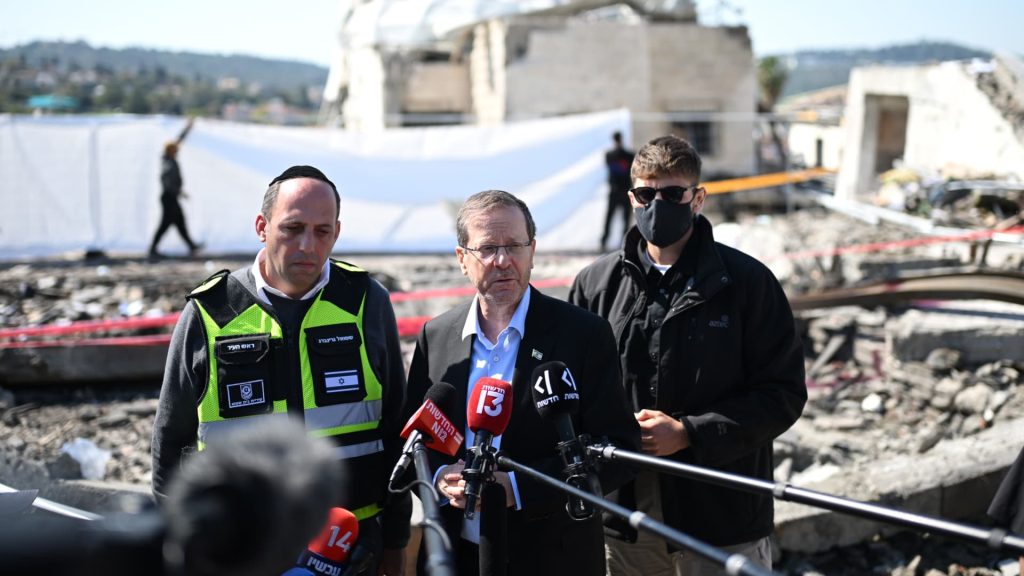
During a virtual address to American corporate executives at Yale’s CEO caucus gathering on Tuesday, Israeli President Isaac Herzog acknowledged the financial burden of the ongoing Middle East conflict while defending it as essential for establishing lasting peace in the region.
Speaking via video link to the Washington event, Herzog characterized the military campaign that commenced February 28 as a pivotal moment that has brought together multiple nations against Iran’s destabilizing influence across the Middle East.
The Israeli leader emphasized the unprecedented nature of the regional coalition, describing it as resembling a NATO-style alliance formed in response to Iranian aggression. He noted that participating countries share a common experience of facing Iranian-backed threats and are now coordinating their response efforts.
Herzog directly addressed the economic concerns of the business community, recognizing their focus on financial data and operational costs. However, he argued that short-term sacrifices are necessary to achieve long-term regional stability and prosperity.
The president stressed that weakening Iran’s military capabilities remains the primary objective of the campaign, suggesting this approach will create opportunities for positive change throughout the Middle East.
Among the prominent business figures attending the exclusive gathering were Pfizer’s chief executive Albert Bourla, AOL co-founder Steve Case, Washington Commanders partner Mark Ein, Booking Holdings CEO Glenn Fogel, and Lazard’s CEO Peter Orszag.
When questioned about strategic planning for Iran’s future, Herzog praised the depth of intelligence sharing and coordination between American and Israeli forces. He compared the current level of military cooperation to the alliance structures seen during World War II, highlighting the unprecedented nature of the partnership.
The Israeli president also suggested that the military pressure on Iran’s government and infrastructure could potentially encourage internal opposition movements within the country. He referenced recent violent crackdowns by Iranian authorities, describing the regime’s treatment of its own citizens as evidence of its authoritarian nature.
Herzog concluded by reiterating that the primary strategy involves significantly degrading Iran’s capabilities, which he believes is currently being successfully implemented through the ongoing military operations.