Budget Airline Shuts Down Operations After Financial Struggles and Failed Rescue Attempts
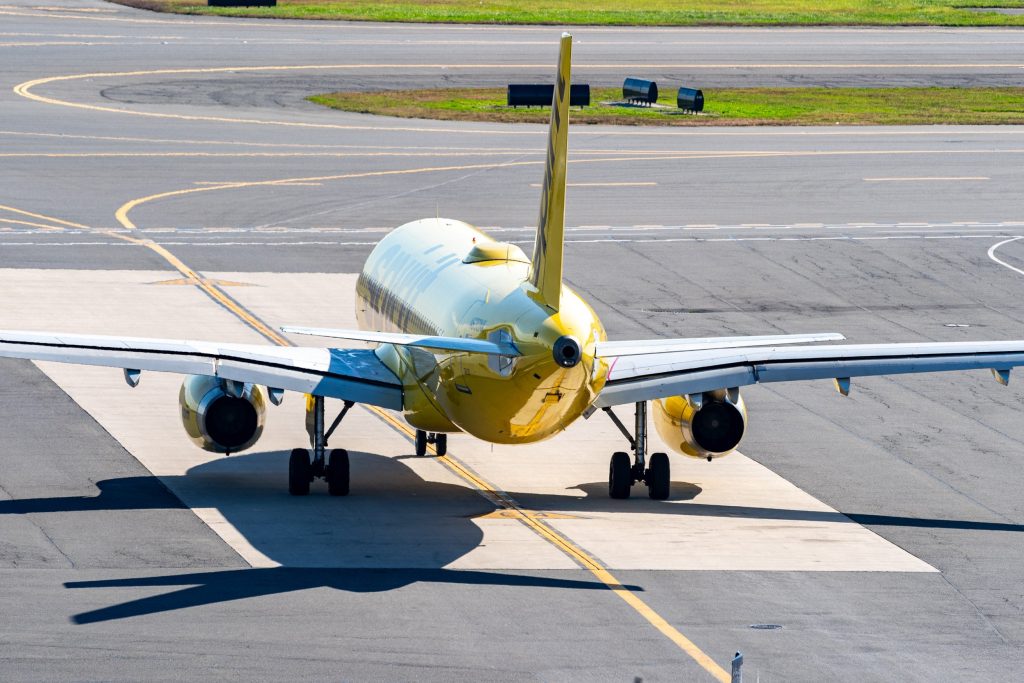
The collapse of a major budget airline represents more than just another corporate failure—it’s a stark reminder of how fragile the ultra-low-cost carrier model has become in today’s aviation landscape. When a carrier known for its distinctive bright aircraft livery ceased operations permanently, it marked the end of an era for no-frills air travel.
I believe this shutdown was inevitable, given the mounting pressures facing budget airlines today. The carrier’s demise came after exhausting all options, including unsuccessful attempts to secure government assistance and additional funding from creditors. Rising fuel costs, particularly an 80% spike in jet fuel prices due to geopolitical tensions, proved to be the final nail in the coffin.
What strikes me most about this situation is how it exposes the vulnerability of the ultra-low-cost model. While these airlines democratized air travel by making flights accessible to price-sensitive consumers, they operated on razor-thin margins that left little room for error or external shocks.
The Human Cost of Corporate Collapse
The immediate aftermath was devastating for travelers and employees alike. Thousands of passengers found themselves stranded over a weekend, scrambling to find alternative transportation. More troubling is the impact on approximately 9,500 direct employees—or 17,000 including contractors—who suddenly lost their livelihoods.
This is where I think the broader aviation industry bears some responsibility. The consolidation of major carriers has created an oligopoly where four airlines control roughly 80% of the domestic market. When a budget competitor fails, it reduces options for consumers and potentially leads to higher fares across the board.
A History of Financial Turbulence
The airline’s struggles weren’t sudden—they were years in the making. Multiple bankruptcy filings since late 2024 signaled deep structural problems that couldn’t be resolved through traditional restructuring. The carrier had been shrinking its operations, cutting routes and staff in a desperate attempt to achieve profitability.
One particularly damaging issue was the grounding of dozens of aircraft due to engine problems with their newer fleet. While the airline received some compensation, it wasn’t enough to offset the operational disruption and lost revenue. This highlights a critical weakness in the budget model—when you operate with minimal redundancy, any significant operational issue can be catastrophic.
The Blocked Merger That Could Have Changed Everything
Perhaps the most consequential decision came when federal regulators blocked a proposed merger with another carrier. The government argued that consolidation would harm competition and lead to higher prices for consumers. However, I believe this decision was shortsighted.
The reality is that allowing the merger might have preserved more competition in the long run by keeping a budget option alive. Instead, the blocked deal left a financially struggling airline to face market forces alone, ultimately resulting in its complete elimination from the competitive landscape.
During the court proceedings, the airline argued it likely couldn’t survive independently—a prediction that proved accurate. The judge’s decision, while legally sound under antitrust law, may have inadvertently reduced competition by forcing the airline toward liquidation.
The Evolution and End of Ultra-Low-Cost Travel
This airline pioneered several practices that became industry standards, including charging separately for carry-on bags and offering completely unbundled fares. While passengers often complained about these fees, the model forced legacy carriers to introduce their own basic economy options, theoretically increasing competition.
The carrier’s former leadership embraced its no-frills image, famously describing their service as transportation equivalent to discount retail stores. This honest approach to customer expectations was refreshing in an industry often criticized for over-promising and under-delivering.
However, the model faced increasing pressure from legacy carriers’ basic economy products, which offered similar low prices but with better route networks, more reliable operations, and attractive loyalty programs. This competition proved unsustainable for an airline already operating on minimal margins.
Who This Affects Most
The shutdown particularly impacts budget-conscious travelers who relied on ultra-low fares to make air travel affordable. Families planning vacations, students traveling between home and school, and price-sensitive business travelers will feel this loss most acutely.
Conversely, frequent business travelers and those who prioritize comfort and reliability may barely notice the change. These passengers typically avoided budget carriers anyway, preferring the amenities and predictability of full-service airlines.
The liquidation process will see creditors attempting to recover their investments by selling everything from aircraft to office equipment. Some assets, like airport slots and gates, may be acquired by other carriers, potentially leading to expanded service from competitors.
Lessons for the Industry
This collapse offers several important lessons. First, the ultra-low-cost model, while innovative, may not be sustainable in an environment of volatile fuel prices and intense competition from larger carriers with deeper pockets.
Second, regulatory decisions about mergers must consider not just immediate competitive effects but also long-term market dynamics. Sometimes allowing consolidation can preserve more competition than forcing weak players to compete independently.
Finally, the aviation industry’s consolidation has created systemic risks. When major players control such large market shares, the failure of smaller competitors can significantly reduce consumer options.
For travelers going forward, this shutdown serves as a reminder to book with reputable carriers and consider travel insurance for important trips. While budget airlines can offer significant savings, they also carry higher risks of operational disruptions and, as we’ve seen, complete service cessation.